
Welcome Hubs help Ukrainians integrate - but challenges remain
Much to celebrate, but uncertainty weighs heavily on the Ukrainian community in Bristol
By Alisha Palmer
Every year, Good Faith Partnership undertakes a survey of the Ukrainian community in Bristol. This plays an important role in informing the priorities of our Welcome Hubs network moving forward. Our annual survey results from April 2026 (completed by 101 Ukrainian households in Bristol) highlight the journey of successful integration that the Ukrainian cohort has been on over the past four and a half years, as well as some of the salient challenges that the community still faces - most noticeably the impact that uncertainty over people’s residence status in this country has on their health and wellbeing.
The Story So Far
Four and a half years on from the invasion of Ukraine, almost a quarter of a million Ukrainians have fled the conflict and settled in the UK. Across the country, residents have generously opened their homes to Ukrainian families - providing accommodation and sponsorship for new arrivals under the Homes for Ukraine scheme. These individuals have been on a journey of adaptation and integration since then, as they’ve made new relationships, adjusted to life in a new country and culture, and built new lives for themselves.
In Bristol, Good Faith Partnership responded in the immediate aftermath of the war by working in partnership with Bristol City Council and the city’s faith communities to set up a network of fifteen Welcome Hubs across the city - nine of which are still active today. Welcome Hubs are designed to be safe spaces of sanctuary and welcome for Ukrainian arrivals. Located in and run by local communities (in most cases, local churches) these spaces allow Ukrainians to meet one another, share common culture and experience and speak in their own language, whilst also having an opportunity to meet longer term Bristol residents, receive support with finding work, accommodation or school placements and hear the message that they are welcome here communicated to them in both words and action.
“I attend the Welcome Hub because it helps me practice my English. It is also a great opportunity to meet other Ukrainians, make new connections, and communicate with people who understand my experience.
The Welcome Hub gives me a sense of community and support. It also opens different opportunities to learn new things, share information, and feel more confident living in the UK.”
Changing Needs, Changing Support
Bristol’s Welcome Hubs have remained a constant presence in the city for the Ukrainian community. Over the last four and a half years, 70% of Ukrainians in Bristol have engaged with the nine Welcome Hubs, and they are still attended by 44%. The Hubs have gradually adapted their offers over the last four years to align with the changing needs and desires of the Ukrainian cohort, and in some cases have now opened up to people of other nationalities and cultures.
Some ongoing regular hub activities continue, including evening meals, coffee mornings and ESOL classes, but these are accompanied by increasingly popular trips and excursions, as well as other one-off activities. Many Ukrainians in Bristol are now employed, renting private accommodation, and embedded in their own social networks and, as a result, have less capacity and need for weekly hub sessions.
Instead, the offer of trips and excursions provides an opportunity for ‘reunion’ amongst hub communities who were one another's source of key support when they first arrived in Bristol. In addition, trips facilitate the opportunity to see or explore places that the cohort may not otherwise have financial or transport access. Trips this year have included visits to Lyme Regis, the Forest of Dean, Tyntesfield, Tate Britain and Stratford-Upon-Avon.
Despite these changes in the Hubs’ activities and rhythm, we have seen an unwavering commitment from generous local volunteers who faithfully offer friendship, welcome, advice and cups of tea to new arrivals in the city.
“The welcoming atmosphere of the hubs gives me feelings of safety and support. It is a place where my son and I can meet other Ukrainians and have a relaxing chat with a cuppa, to share our pains and have a chance to get support.
My son and I are isolated (no relatives, no friends), the hubs are really appreciated, and we always look forward to visiting them. It works for us as a kind of therapy which improves our mental health.”
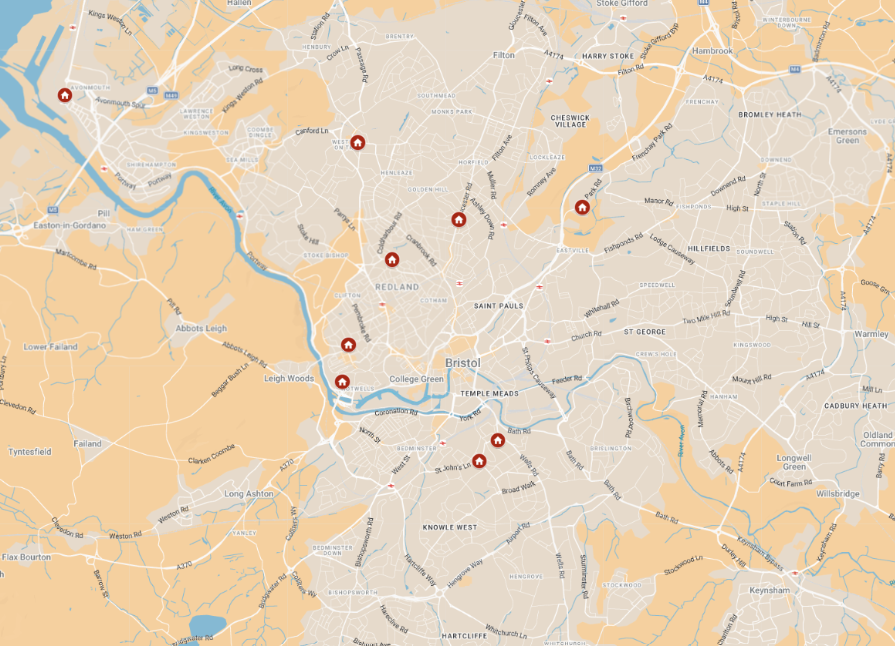
Welcome Hub locations
An Integration Success Story
The results of our 2026 survey show that many Ukrainians no longer consider themselves ‘new’ to Bristol, but are deeply embedded in the life of the city.
Notably, over two-thirds of Ukrainian respondents (69%) shared that they feel a part of the Bristol community. For 60% of them, they are actively attending community activities in the city, including volunteering, sports and educational activities. As they’ve built lives, memories and friendships, Bristol is now where they’d call home.
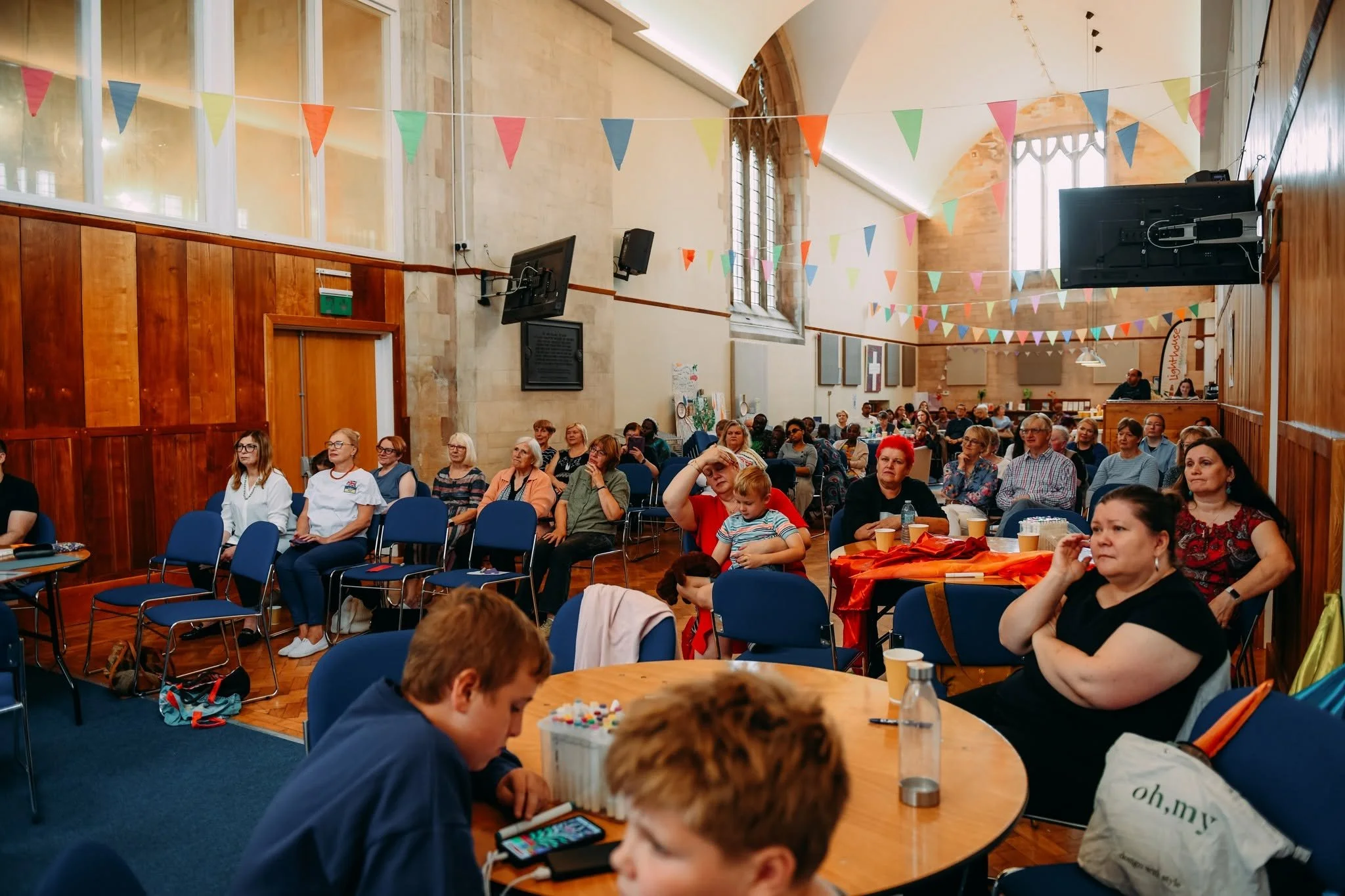
Welcome Hub event at St Andrew’s, Avonmouth
In addition, two-thirds of the cohort have been supported by the Homes for Ukraine team into Private Renting agreements, no longer living with host families, but being able to build an independent life of their own.
Furthermore, 71% of the cohort are currently working - a 5% increase since 2025. Of the minority who are not working, one third are engaged in active volunteering placements.
Finally, more than half (51%) of the cohort attend English classes. As a result of engagement, 60% of the community would rate their English level as good or excellent.
These stats communicate a distinct picture - Ukrainians have become deeply embedded in the life of Bristol. And for many, this is not only a temporary shift of gravity but an expression of a desire to remain in the city for as long as they are able. In fact, the vast majority of survey respondents (73%) expressed a desire to remain in Bristol for as long as their visa allows.
Challenges Remain
The flip side of the integration success that we’ve witnessed and celebrated amongst Bristol’s Ukrainian community is a lack of clarity regarding their future. Most Homes for Ukraine residents have another 18 months on their visas, but lack any clarity about their future beyond this point. 15% of survey respondents identified this as the greatest challenge to daily life.
“Temporary housing, temporary assistance, temporary rights… temporary life.”
Whilst the clear resilience of this cohort has been demonstrated in the way that they have picked up language skills, employment or rental contracts in a new city, they are continually trapped in an undesirable position - investing in a life in Bristol that they want to remain in but aren’t sure if they can.
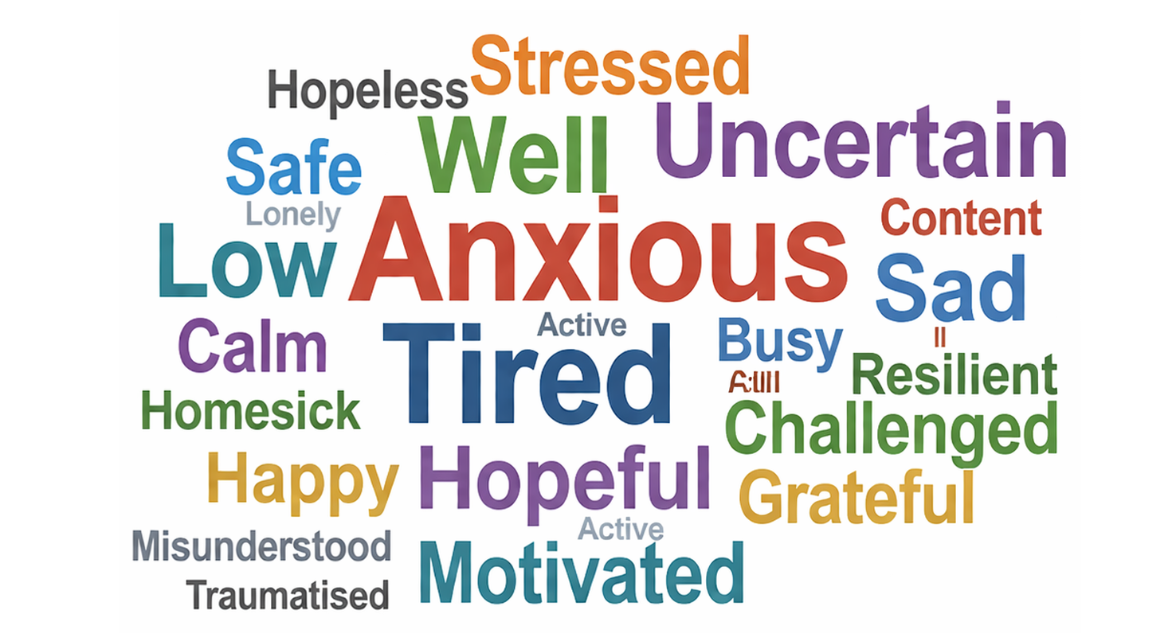
Word cloud expressing day-to-day experiences of Ukrainians living in Bristol
Going forwards, the biggest challenge facing this cohort is securing clarity about their future, including exploring opportunities to remain in the UK. Whilst ultimately this decision remains with the Home Office, at Good Faith Partnership we are keen that Welcome Hubs remain a key part of the Welcome infrastructure for new Ukrainian arrivals, and are attentive to the current needs of the cohort. In the coming year, we plan to implement mental health training sessions and wellbeing activities into the hubs so that the community is better equipped to cope with the stress that unfortunately is the background to everyday life. We are also planning to support several citywide events that celebrate the presence and contribution of the Ukrainian community in Bristol.